Pages


Showing posts with label Triptych. Show all posts

Friday, July 30, 2021

Far Horizon


Heartfelt thanks for the outpouring of support you’ve sent my way since last Tuesday’s post; hearing your own stories of not only surviving, but thriving, has been inspiring. I won’t be able to respond to all of your messages - there are far too many and they are still coming. But be assured every one of them means the world.

More than once over the past several months, I’ve wanted to say something about my diagnosis. In the end, it became even harder to say nothing. Responding to texts, emails and PMs on a fairly regular basis explaining why I couldn’t meet individuals for coffee and the like, much as I’d sometimes have loved to, was draining and stressful. I felt caught in a loop, reliving the diagnosis each time, using precious energy I needed for my work and for healing. Don’t get me wrong - it’s lovely that people want to catch up and in these days of restrictions and lockdowns, there seems to be a greater sense of urgency involved. But even after I confided in people, some would still persist, and once again I would try to explain about my compromised immune system and the necessity to self-isolate. Despite some misgivings, finally I felt I had no choice but to put it all out there, in the hope that once and for all, people would understand. They have - in droves - and I can’t begin to say how much it means to me. 

I’m feeling truly blessed to have the wonderful family and friends who’ve been through this with me and despite the increasingly debilitating side-affects of the chemotherapy, spending even brief time in the studio has been an essential part of the recovery process. So, I might add, has preparation for my current solo show. Some days there are so many details to attend to, my head is fairly spinning - and I’ve loved every minute of it. 

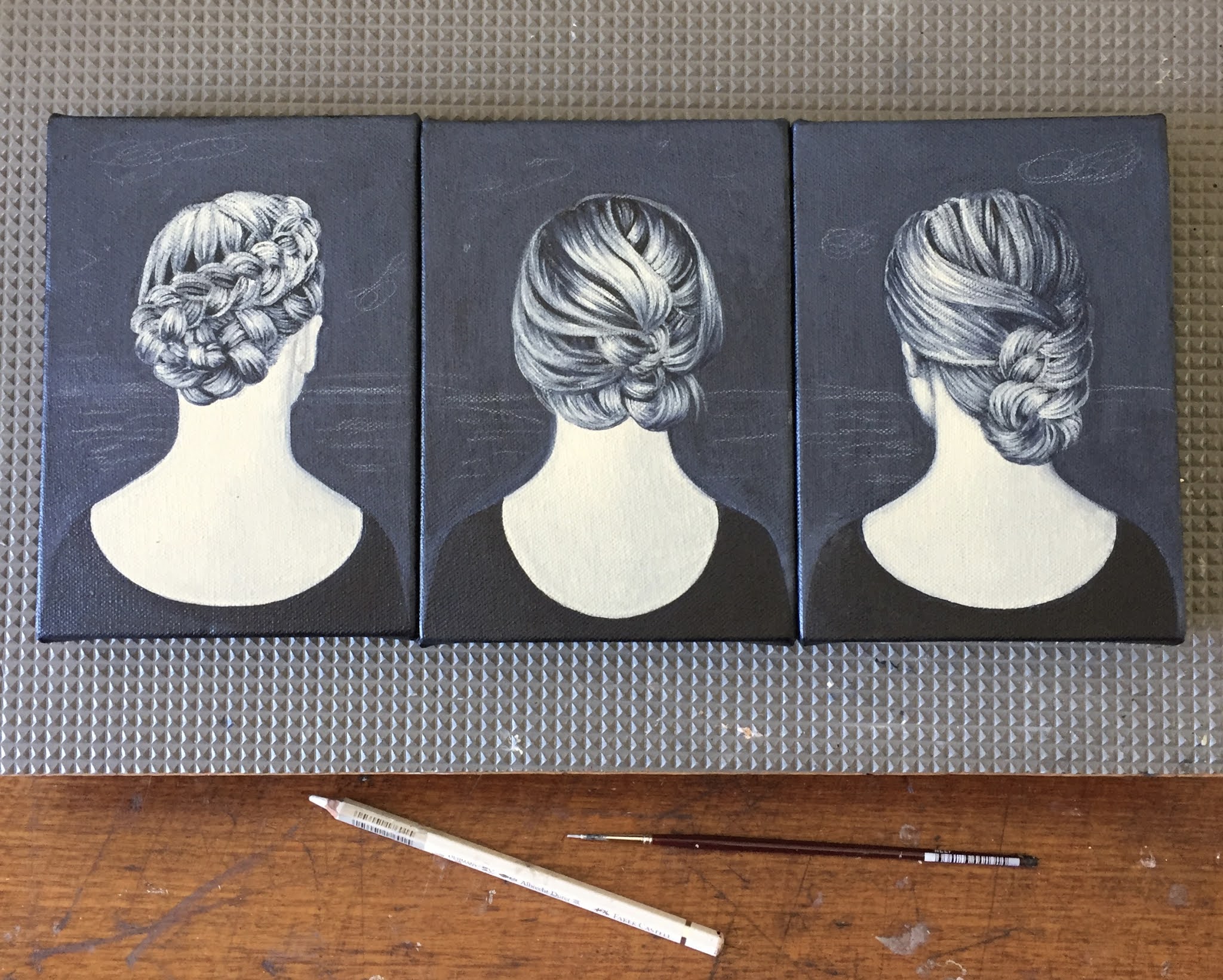
Pictured above is Far Horizon, 2020, triptych, acrylic on three canvases, 18 x 12.5 cm (each panel), the first work I made after receiving the diagnosis and the last work I posted before taking extended leave from social media. At the time, I faced an uncertain future - I didn’t even know if the cancer had spread. For months afterwards, I couldn’t even look at the painting because it triggered dark memories. In the intervening period, however, Far Horizon has become a potent reminder of just how far I’ve come. This week Stephen McLaughlan Gallery reopened. The next time I see the work will be at the Artist Celebration tomorrow afternoon - a milestone of sorts. It feels like I really will have something to celebrate. 

Thursday, December 3, 2020

Beyond the Sea


Pictured above: a small triptych as yet untitled, acrylic on canvas, 18 x 38 cm overall. 

A deeply personal work, it will form part of a suite of paintings. The collective title of the suite-in-progress is Beyond the Sea (a working title only, although it will probably remain).

This is essentially a tonal work involving a palette of only two colours. Beginning with a black gessoed surface, I used Titan Buff and Paynes Grey from the Golden range of acrylics. For those who are interested in the process, a series of progress views follows. Click on individual images for a clearer view. 


Saturday, November 7, 2020

Rückenfigur

Deborah Klein, current work in progress, a triptych as yet untitled.
Acrylic on linen, 40.5 x 30.5 cm (each panel).


I have to stay alone in order to fully contemplate and feel nature. The painter should paint not only what he has in front of him, but also what he sees inside himself.

Caspar David Friedrich


Recently I discovered by sheer chance that the dominant motif in my work for well over two decades has a name. It’s “Rückenfigur”, or “figure seen from the back”. Why did I not know this before? The subject dates from antiquity, but the term originated in the German Romantic Movement of the 19th century and is most closely associated with the painter Caspar David Friedrich, whose work I’ve long admired. In fact, his paintings were the main catalyst for my current body of work, a series of anonymous figures I call “Journeywomen”.


Caspar David Friedrich, Wanderer above the Sea of Fog, 1818.
Oil on canvas, 94.8 x 74.8 cm, Kunsthalle Hamburg.


The history of figures viewed from behind spans the entirety of visual culture, including graphics, cinema and photography. Among the painters who have employed the Rückenfigur in their works are Rene Magritte, Man Ray, Salvador Dali, Gustave Courbet, Jean-Auguste-Dominique Ingres andmost notably and consistently, another of my favourite artists, Vilhelm Hammershøi.


Vilhelm HammershoiInterior with Young Woman Seen from the Back, 1904.
 Oil on canvas, 60.5 x 50.5 cm, Randers Museum of Art.


The Rückenfigur is often portrayed as an outsider, reflecting a mood of quietude, self-containment and isolation, although she doesn’t necessarily travel alone. Paradoxically, she invites us to share her journey and see the world through her eyes, to the extent that we almost become her.

What's in a name? That which we call a rose

By any other name would smell as sweet.

William Shakespeare, Romeo and Juliet, ca 1597.


I’m fairly well versed in the ever-evolving history of  “rear view portraits,” yet this feels like a real light bulb moment. I am amazed at how empowering it is to to know that there is a collective name for them. To my mind, it validates and unifies this somewhat scattered tradition. Moreover, the Rückenfigur addresses a particularly divisive time in our history, when our state of disconnection - from ourselves, from each other and from the natural world - seems greater than ever before. 


Only connect! That was her whole sermon. Only connect the prose and the passion, and both will be exalted, and human love will be seen at its height. Live in fragments no longer. Only connect, and the beast and the monk, robbed of the isolation that is life to either, will die.

– E. M. Forster, Howards End, 1910.


Photo credit for above image: Shane Jones.